
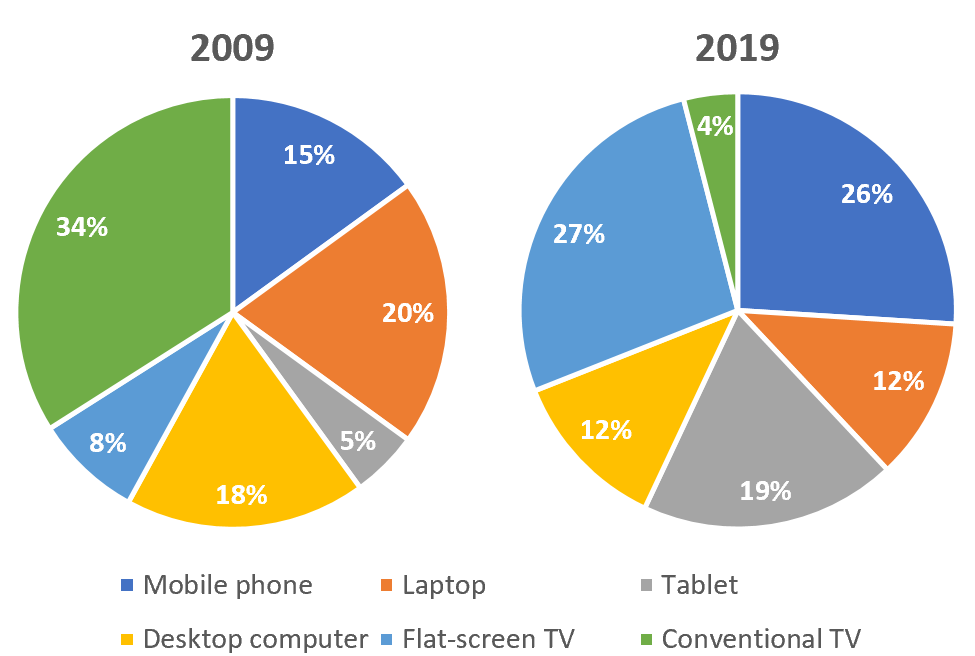
The two pie charts illustrate the proportion of different devices used by young adults in Canada to watch television programmes in 2009 and 2019.
Overall, there was a marked shift from older, bulkier models to more modern devices, with flat-screen televisions replacing conventional sets as the dominant choice. Other portable and internet-based viewing options also gained ground, while traditional formats saw substantial declines.
In 2009, conventional televisions were the most widely used, accounting for 34% of all viewing. Flat-screen TVs, at just 8%, ranked well behind. Desktop computers (19%) and laptops (20%) held similar shares, while mobile devices and other methods made up smaller proportions.
By 2019, flat-screen TVs had risen sharply to 27%, becoming the most popular device, while conventional televisions plummeted to just 4%. Laptop usage fell slightly, and desktop viewing saw a notable decline. Meanwhile, smartphones, tablets, and other portable devices expanded their share, reflecting the growing influence of digital streaming and on-demand content.
These changes highlight a decisive movement over the decade towards technology that offers higher visual quality, greater portability, and improved internet connectivity, in line with evolving media consumption habits.