
Band 9 Sample Answer
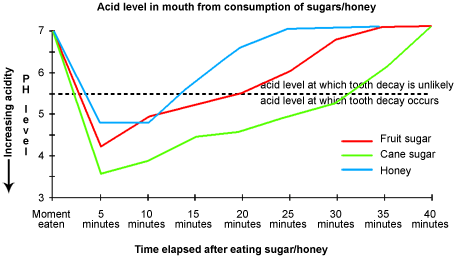
The line graph depicts changes in oral pH over time following the consumption of three different sweeteners: cane sugar, fruit sugar, and honey. It also indicates the duration for which the pH remains below 5.5, the critical threshold associated with an increased risk of tooth decay.
Overall, cane sugar causes the most significant and prolonged reduction in oral pH, thereby posing the greatest threat to dental health. Honey has the mildest and shortest impact, with fruit sugar showing intermediate effects.
Initially, the oral pH starts at a neutral value of 7 for all sweeteners. After consuming cane sugar, the pH plunges rapidly to around 3.5 within five minutes and remains below the danger threshold for approximately 30 minutes. Fruit sugar leads to a decrease to about 4.3 after five minutes, with the pH staying under 5.5 for nearly 20 minutes. In contrast, honey results in a gentler decline, lowering the pH to approximately 4.7, and the pH rises back above 5.5 after about 13 minutes.
In conclusion, although all three sweeteners temporarily reduce oral pH to levels conducive to tooth decay, cane sugar exhibits the most harmful effect, whereas honey is the least detrimental.
Paragraph-by-Paragraph Breakdown
Paragraph 1 – Introduction
- Purpose: Paraphrases the task, specifying what the graph shows (pH changes after consuming different sweeteners and the risk threshold).
- Why it’s Band 9: Uses precise terminology (“depicts,” “critical threshold”), is concise and clear.
Paragraph 2 – Overview
- Purpose: Summarizes the main trends, comparing the impact of the sweeteners without mentioning specific data.
- Why it’s Band 9: Provides a clear comparative summary (“most significant,” “mildest and shortest,” “intermediate effects”) without numbers, showing understanding of the big picture.
Paragraph 3 – Main data (Detailed comparison)
- Purpose: Presents detailed data for cane sugar and fruit sugar together, describing the changes over time and duration below the threshold.
- Why it’s Band 9: Logical grouping, varied vocabulary (“plunges rapidly,” “remains below,” “leads to a decrease”), and accurate data presentation.
Paragraph 4 – Main data (Honey)
- Purpose: Describes honey’s effect separately to highlight contrast with other sweeteners.
- Why it’s Band 9: Clear, precise data and use of phrases like “gentler decline,” “rises back above,” demonstrating range and accuracy.
Paragraph 5 – Conclusion
- Purpose: Optional summary reinforcing the key message.
- Why it’s Band 9: Concise restatement with sophisticated language (“conducive to tooth decay,” “exhibits the most harmful effect”).